FAQ
Questions, answered
The things travellers most often ask us before a trip to Kashmir.
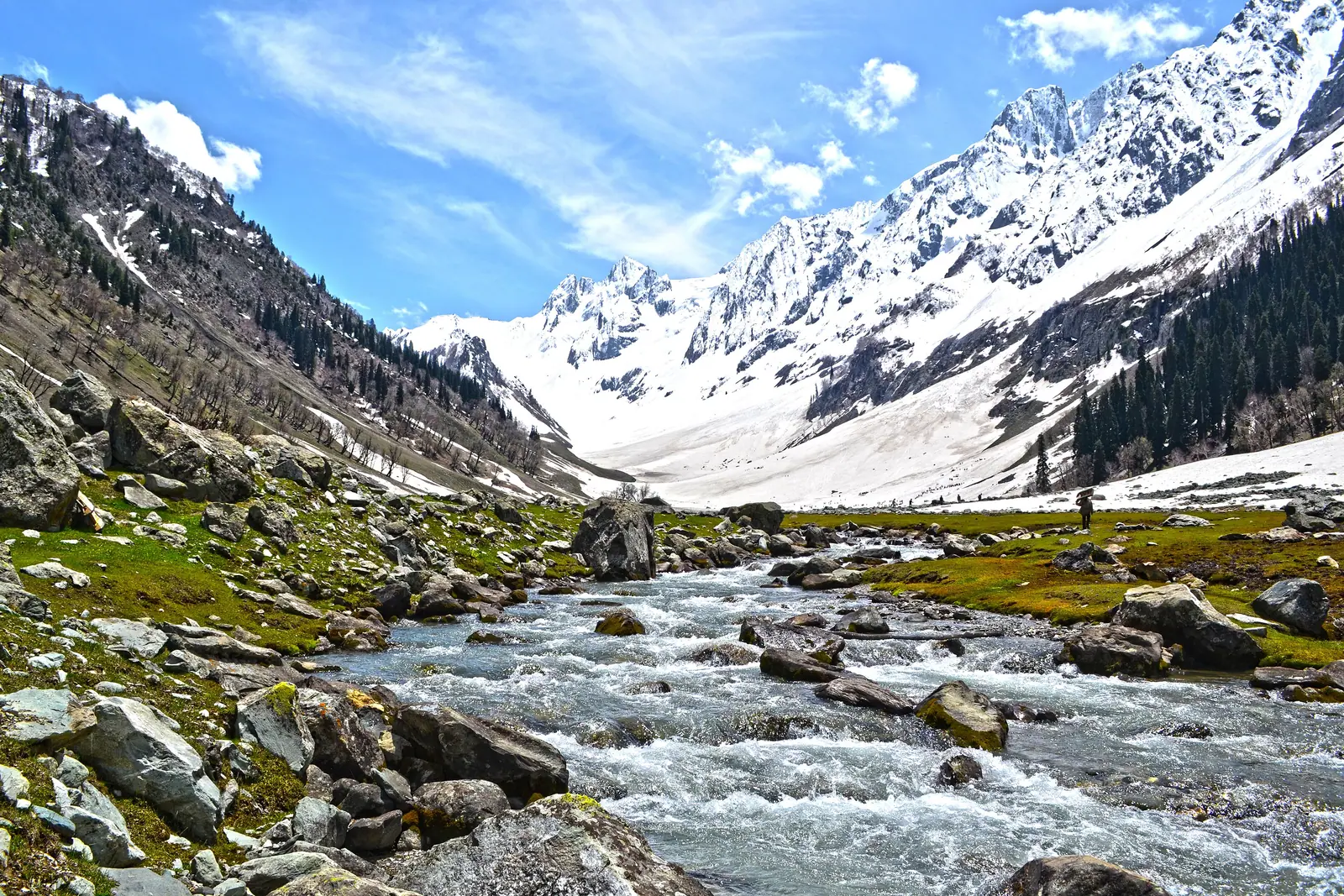
Photo: Mohammad Iliyas khanday · CC BY-SA 4.0 · Wikimedia Commons
When is the best time to visit Kashmir?
It depends on what you want to see. April to June brings blossom, tulips and green meadows; July and August are warm and busy; September to November is clear and colourful, with chinars turning in late October; and December to February is the season for snow in Gulmarg. Kashmir is worth visiting in every season.
Planning
How many days do I need for a Kashmir trip?
Five to seven days covers Srinagar, Gulmarg, Pahalgam and Sonamarg comfortably. With eight to ten days you can add quieter meadows like Yusmarg and Doodhpathri, or slow the pace for a family or honeymoon trip.
Planning
Can you customise an itinerary for us?
Yes. Every package on this site is a starting point. Tell us your dates, group, interests and budget through the Plan Your Trip form and we will propose an itinerary built around you.
Planning
Do I need any permits to visit Kashmir?
Indian citizens do not need a permit for the main tourist areas such as Srinagar, Gulmarg, Pahalgam and Sonamarg. Foreign nationals need a valid Indian visa. Some border and high-altitude areas require separate permits; we will advise if your route needs them.
Planning
Will my mobile phone work in Kashmir?
Postpaid connections from other Indian states generally work. Prepaid SIMs issued outside Jammu and Kashmir do not work in the region. International visitors should check with their provider about roaming.
Planning
How cold does it get in winter?
Srinagar typically falls below freezing at night from December to February, and Gulmarg is considerably colder. Daytime temperatures in Srinagar are often only a few degrees above zero during Chillai Kalan (21 December – 31 January). Warm layers, gloves, a hat and waterproof boots are essential.
Weather
When is it possible to see snow?
Gulmarg usually has reliable snow from late December to early March, and snow often remains at higher points such as Apharwat or Thajiwas into late spring. Snowfall varies from year to year and cannot be guaranteed.
Weather
How do we travel between destinations?
Our itineraries use a private vehicle with a local driver for transfers and sightseeing. In Pahalgam, Gulmarg and Sonamarg, some sightseeing points can only be reached by locally registered union taxis or ponies, which are paid locally.
Transport
How do we get to Srinagar?
Srinagar International Airport has direct flights from several Indian cities, including Delhi and Mumbai. Rail services also connect Srinagar with the rest of India, and the city can be reached by road from Jammu. We can arrange your pick-up from the airport or railway station.
Transport
What is usually included in a package?
Each package page lists what is typically included and excluded. Your written quotation confirms exactly what is included for your trip — accommodation, vehicle, meals and activities — before you pay anything.
Packages
Why don't packages show a fixed price?
The cost of a Kashmir trip changes with season, hotel category, vehicle and group size. Rather than show a misleading headline price, we send a personalised quotation based on your actual plans.
Packages
Is submitting an enquiry the same as booking?
No. Submitting an enquiry simply asks us to contact you. Your trip is only confirmed once you have accepted a written quotation and the agreed payment terms.
Packages
How do payments work?
Payment terms, accepted methods and any advance required are set out in your quotation. Please do not make any payment until you have received a written quotation from us.
Payments
What is your cancellation policy?
Cancellation terms depend on the hotels and services in your itinerary and are confirmed in writing with your quotation. Please read our Cancellation Policy page and ask us if anything is unclear.
Cancellation
Is Kashmir suitable for families and elderly travellers?
Yes. Most sightseeing involves gentle walks and drives. Tell us about any mobility or health needs and we will suggest suitable hotels and pacing. Note that higher points like Apharwat are at nearly 4,000 metres, which may not suit everyone.
General
What should I pack?
Layers are key in every season. In summer bring light clothing plus a warm layer for evenings; in spring and autumn add a jacket; in winter bring thermal layers, a heavy jacket, gloves, a hat and waterproof boots. Modest clothing is appreciated, especially at religious sites.
General
Still wondering about something?
Ask us — we usually know, and if we don't, we'll find out.
Ask a question